By Ray Hanania
Former Chicago City Hall reporter Ray Hanania takes a close look at the impact Maria Pappas has had in fighting for the rights of taxpayers not only during her career in public service as a Cook County Commissioner and Cook County Treasurer, but as a humanist who has fought to help those people in need.
In fact, her fight to champion the rights and needs of taxpayers comes from a life of fighting to help people — all people. It is a life’s passion that she extends into public service.
Most people know about her past 35-plus years in Public Service at Cook County.
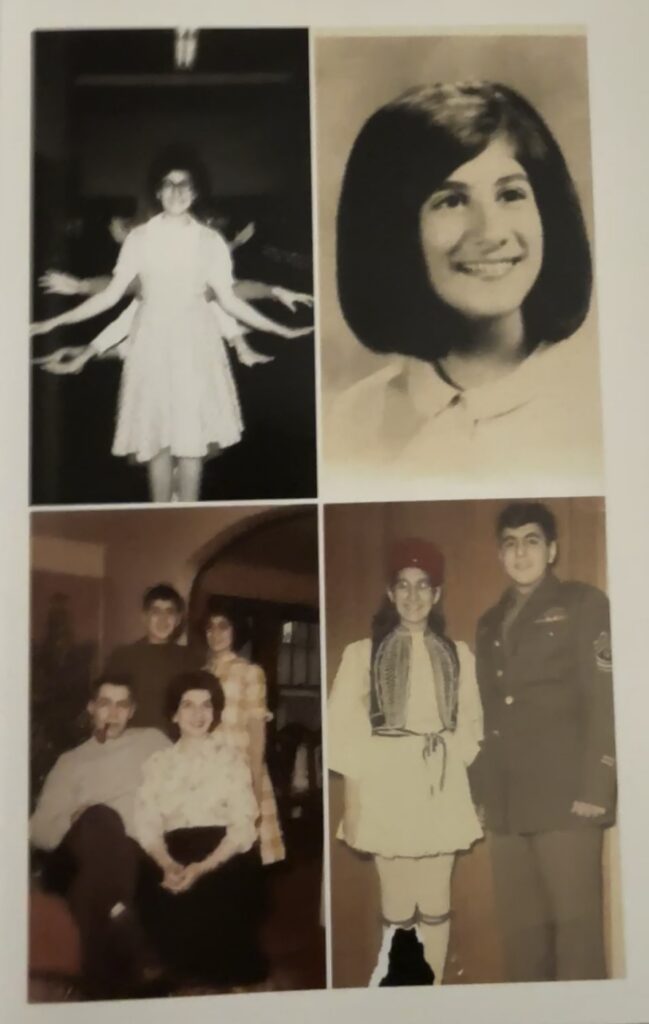
But the memoir, “Maria the Pappas,” offers the backstory on an individual who, from a very young age, learned the importance of helping others.
Here is the full column review:
Maria Pappas shines a bright light on public service
I met Maria Pappas in 1990 as my career shifted. She was a bright light who challenged an environment of dark backroom deals, insider manipulation, and secretiveness that betrayed the public need
Sep 09, 2026
By Ray Hanania
In a half-century of covering and reporting on Chicagoland politics, I have come across many great elected officials, people who define the term “public servants.”
Pappas is intellectually way above the average elected official, political candidate, or public office holder, and as a consequence, it sparks outbursts of frankness and truth-telling that often surprise people.
Some people can take it and some people can’t.
But the truth is, her views are driven by this need to do good not just for herself but for the public.
I met her in 1990 when she was first elected to the Cook County Board of Commissioners, a place I often wrote about as the “Cook County bored” in my reporting and columns as a Chicago Sun-Times City Hall Reporter.
The Cook County Building was the conjoined twin of the more powerful and influential Chicago City Hall. One side of the building was Cook County, which faced east on Clark Street, and the other side of the building was City Hall, which faced west on LaSalle Street.
Chicago City Hall and the Cook County Building were built between 1905 and 1911, with the east side (County Building) finished in 1908 and the west side (City Hall) finished in 1911. It was birthed by the grandparents of the Chicago Machine, at a time when County government was more powerful than municipal government. But that changed, and the power shifted in Chicago, as it did in the rest of the world, from the East to the West.
Machine politics solidified under Mayor Richard J. Daley after his election in 1955, two years after I was born. His policies combined two missions: one to provide benefits to The Machine leadership and to the people who supported The Machine like the precinct workers, their families, and their coterie of loyal voters; and the other was to provide service to taxpayers themselves.
It was a good balance intended to benefit both sides, but it quickly tilted as a result of human nature. The Machine became a Chimera of Power that consisted of patronage, pensions, and perks — what some others referred to quietly in the dark recesses of City Hall as the “Ghidorah.”
For a while, The Machine enjoyed its powers while providing a soothing, calming political ointment that gave the public just enough. In the 1950s, it was as little as giving voters a tin garbage can lid to keep them happy, while ensuring police kept the riff-raff out of the high-voting neighborhoods. Crime levels were defined, not measured. People felt safe, despite the daily reports of murder and mayhem all around. But somehow, in The Machine, its core voters felt comfort and safety.
Out of that rose people who were driven by a need to ensure that the people whose hard work and sweat funded the politics of the insiders through their taxation that continued to rise, while services slowly diminished. One of those voices was from Maria Pappas.
The Machine had forgotten the people. The tin garbage can lids suddenly became not enough. Government grew, services withered, taxes rose, political perks ballooned.
And then one day, bored to death at the Cook County colloseum, I heard a voice rise from its depths. A new commissioner challenging the Cook County Board President, Dick Phelan, demanding that taxes be used ot help the taxpayers, not the politicians who levied them.
The old term “The Levee” which symbolized the swamp and muck of the turn of the century Chicago corruption, had shifted dramatically to become “The Levy,” a tradition of siphoning money away from the taxpayers without their even knowing it.
Pappas owed no one anything for her rise in politics, and her voice was a constant thorn on the crown of Phelan and his political court. Her popularity grew as she often led the elections with the highest vote totals. And it strengthened the sharpness of her sword, her unshackled voice.
She wailed. I remember writing the stories about her battling with Phelan and the taxpayer-driven “tax the taxpayer” drive of the Cook County Board.
But in all the years I have known and followed Maria, I really did not know her own personal experience that forged her personality and drive to help those that needed help, like the taxpayers, homeowners, seniors, families, and our youth.
The First Commandment of The Machine is declarative: “Thou shalt not return a tax dollar taken from a taxpayers.”
Can you imagine a Chicago or Cook County politician who dared to return a tax dollar taken from the taxpayers?
Not surprisingly, Pappas became the first Public Servant to substantially return hundreds of millions of tax dollars in property tax overpayments to the homeowners and business owners, money that was paid double but that The Machine kept in its greedy splurging coffers. Until then, the attitude of government and The Machine was that an overpayment was “A donation. Thank you!”
There is so much more to Maria Pappas.
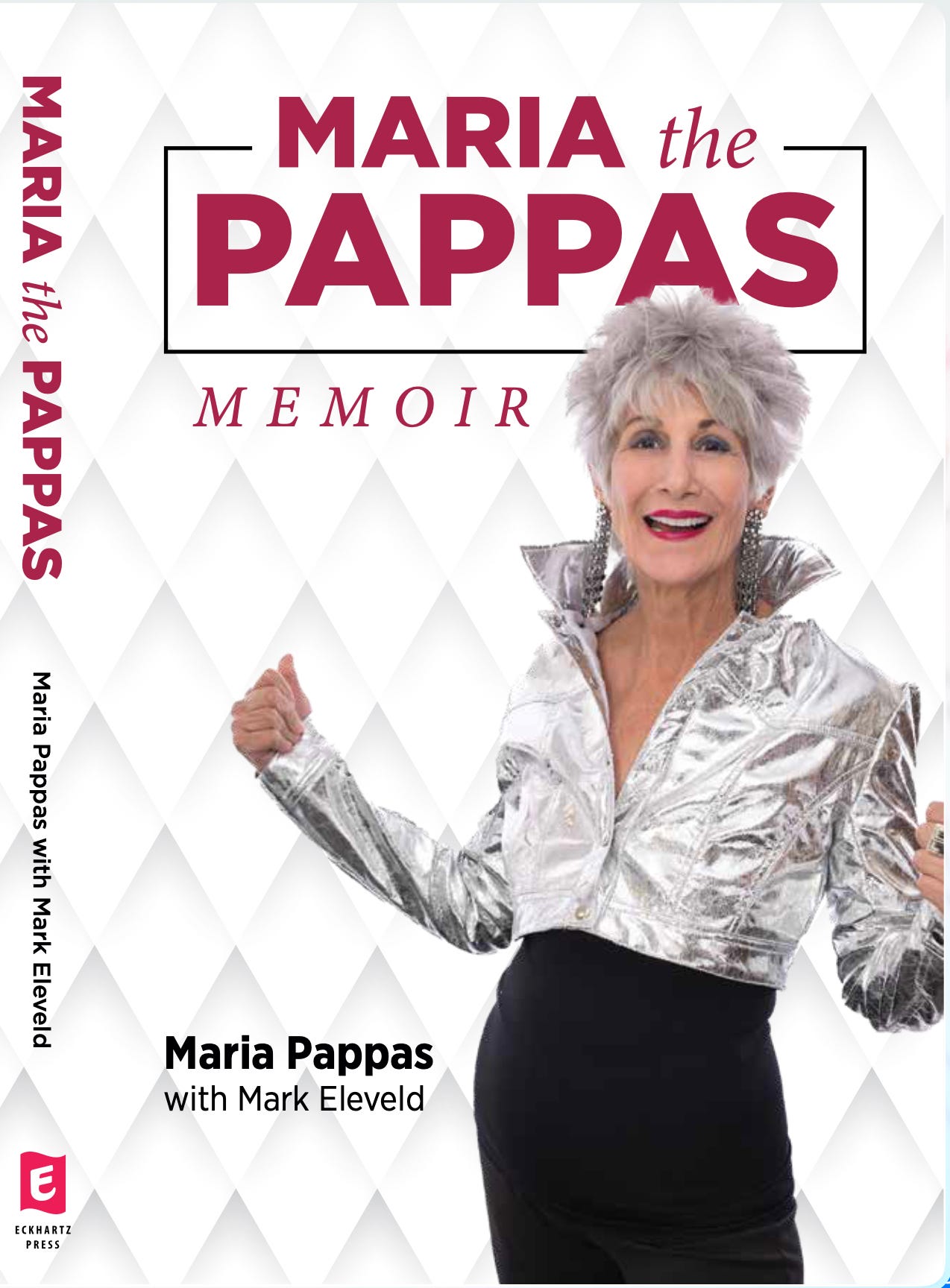
Pappas has written a book with the help of writer Mark Eleveld that provides the backstory of her life and how she became who she is today.
The book is called “Maria the Pappas.” A memoir that presents Pappas as she really is, a collection of apparent contradictions in politics: a hard-driving politician and deeply emotional helper; a government reformer and flamboyant public personality; a Cretan Greek from West Virginia who became a fixture of Chicago politics; and a woman comfortable confronting powerful politicians while also spending enormous amounts of time with ordinary taxpayers, immigrants, clergy, community activists, and people experiencing hardship.
(Pappas means “priest” in Greek. She’s not a priest or priestess in the religious sense we know, but a priestess who champions the needs of the people.
The memoir “Maria the Pappas” is a compelling, inspiring, and extraordinary story about a people’s titan in politics and public service.
Check out the Memoir “Maria the Pappas” at www.MariaThePappas.com. You will find it fascinating. It will be available for purchase very soon.
Click here to read Ray Hanania’s column at CourageousThought.com